Paired evidence for the science of inner states.
What the Archive does: publish paired evidence, watch the Architect refine the Noetic Taxonomy, and see how a claim traces back to its source project.
Physiological recordings and first-person reports of inner experience are almost never paired, so phenomenological analysis stays stranded in separate labs. The Noetic Archive is the answer: a versioned, citable repo of that paired evidence, and the taxonomy of inner states derived from it.
§ 01 — The problem
Consciousness research is stuck in silos.
Most of the field rests on physiological recordings with no account of the experience itself. The two halves of the evidence — what the body did, and what it felt like — were never paired.
The paired data that does exist sits in isolated labs and rarely leaves them. It cannot be searched, compared across studies, or rechecked.
The consequence
Nothing accumulates.
Every lab starts again from zero, and a finding in one lab cannot be tested in another. Paired datasets are rare, and most of this data cannot be found anywhere online.
§ 02 — The answer
The smart Repo, and the taxonomy it produces.
The solution
A repo built for paired evidence
Researchers publish physiological recordings together with first-person reports of the same moments — searchable, citable projects with a DOI. The Librarian checks each contribution on the way in. Publishing is free.
Learn moreThe novel output
The Noetic Taxonomy
Reading many reports, the Architect derives labels for the inner states they describe and attaches the recordings associated with each. That label-and-evidence package is an Archetype; the Taxonomy is the versioned, citable index of them.
Learn moreAnd the Archive is a research tool, not a shelf: a research agent searches Editions, traces any entry back to the projects it came from, and helps you work the evidence — in the web app or on Psyntient Node.
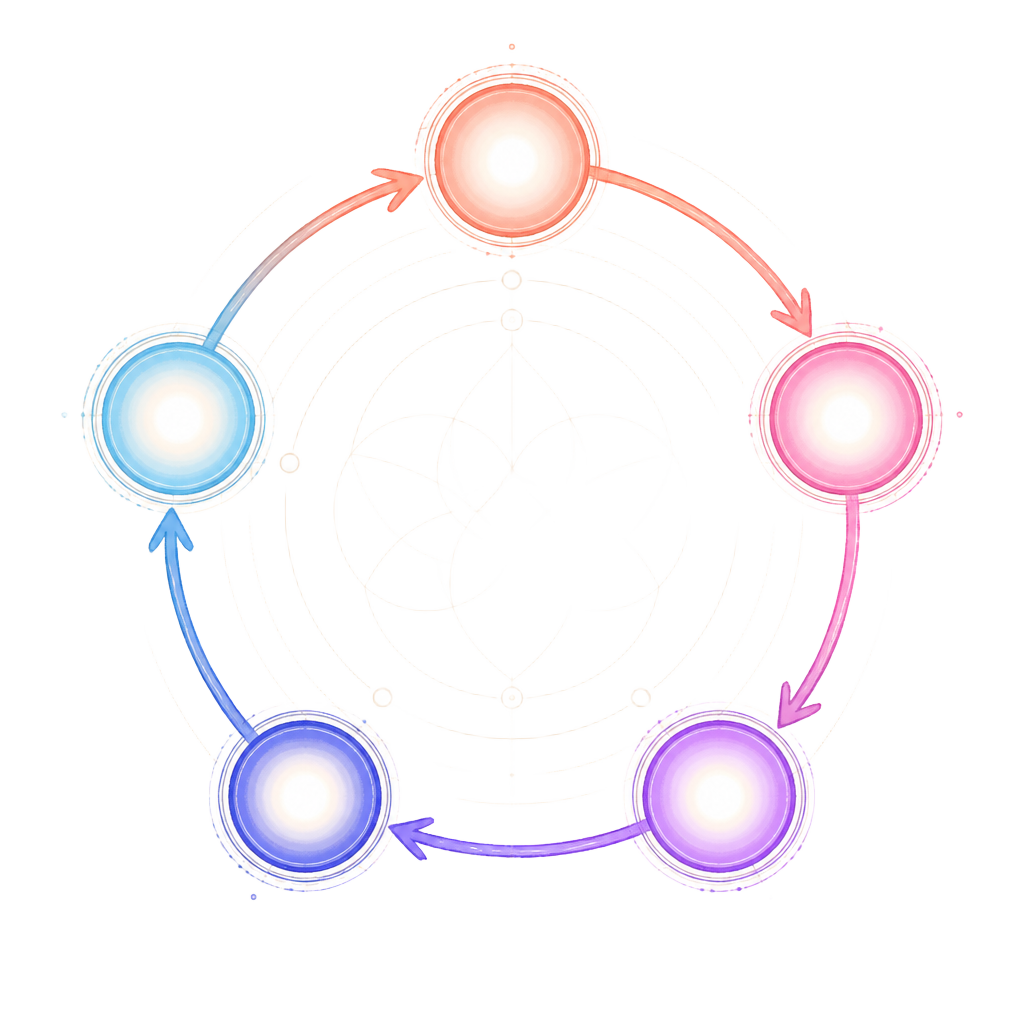
Every contribution compounds.
- 01
Every published project widens the evidence researchers can inspect.
- 02
Every qualified contribution creates another test of the Noetic Taxonomy.
- 03
Every Edition freezes the record so claims can be rechecked.
What the Taxonomy's evidence currently supports — and what it does not — is stated on the validation page.
§ 03 — Pricing, in brief
Publishing is free. Access is the paid service.
Free account
- Read past Editions of the Noetic Taxonomy inside the Archive.
- The Psyntient Nexus community.
Free researcher account
- Everything in a free account.
- The Psyntient Repo — browse in full and publish citable projects.
- Contribute qualified data to the Noetic Taxonomy.
Paid research account
- Everything in a free researcher account.
- The current, latest Edition of the Noetic Taxonomy.
- Cortex — on your Psyntient Node, or via Psyntient Cloud (your own private droplet).
- Psyntient Node downloads, Vaults, and Account Contexts.
- Experiment and protocol tools, and the Node API.
Verified researcher status is earned by credentials, never bought. See research access for what full access includes and your account for what yours covers. Developer pricing is coming separately.
§ 04 — Around the Archive
The service sits inside a wider research programme.
The instruments and applications that expand the work, the scientists who guide its methods, and the community and funding that help build a global map of human experience responsibly.
Marketplace
Instruments and applications
Recording hardware, including Psyntient Ground, plus applications that read and write to the Archive.
ExploreAdvisory network
The scientists behind it
Researchers and principal advisors who guide the Archive's methods and review its validation strategy.
ExplorePartnerships
Labs and institutions
How outside labs treat the Archive as an instrument, and how institutional access is arranged.
ExploreNexus
Community
The free community layer around the science — discussion and collaboration.
ExploreThe Taxonomy is not left to an agent alone. Researchers and principal advisors review, contest and validate what the Architect proposes before an Edition stands.
Are you a scientist? Apply to the Science Advisory Network →
Psyntient — consciousness made easy.